• Reorder in 1 Click

Contact lenses and driving at night

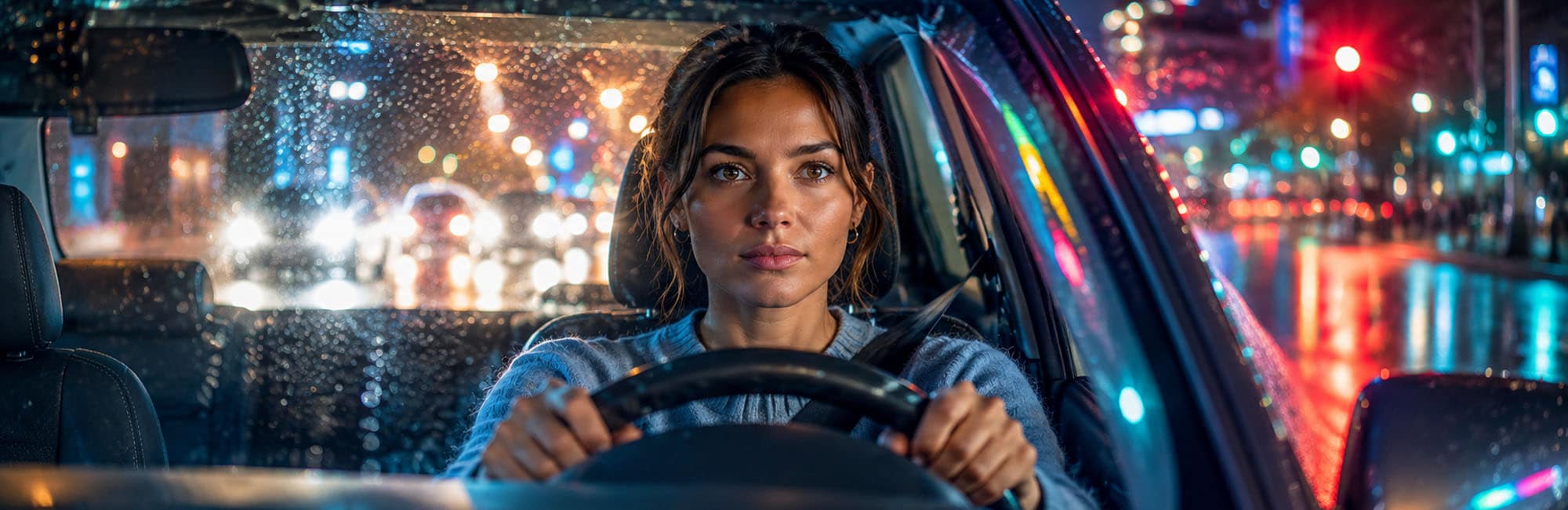
Woman drives car

At a glance: Can contact lenses help with night driving? Yes. Well-fitted contact lenses widen your field of view and can cut down the glare and halos caused by an uncorrected prescription, especially astigmatism. Fresh lenses, an up to date prescription and regular eye tests matter just as much as the type of lens you choose.

Headlights, streetlights and wet roads all make night driving trickier than driving in daylight. If you wear contacts, you may notice your vision gets worse rather than better once the sun goes down. The good news is that the right contact lenses, along with a few sensible habits, can make a real difference.
Why night driving is harder on your eyes

In low light, your pupils widen to let in more light. A wider pupil means more light passes through the outer edges of your lens, natural or corrective, which is exactly where most visual imperfections show up. This is why halos, glare and starbursts around lights are far more noticeable at night than during the day.

We've covered the wider topic of vision and safety in our guide to eyes on the road, but night driving deserves a closer look, so let's get into it.

Contacts vs glasses for night driving

Night driving relies on picking up movement at the edge of your vision fast: a cyclist, a pedestrian stepping off the kerb, an animal in the road. Glasses frames can sit right in that peripheral zone, and rain, condensation or glare bouncing off the lens surface can make things harder still.

Contacts sit directly on your eye, so there's nothing narrowing your peripheral vision and no surface to fog up or catch reflections. For most people, this makes contacts the better choice for night driving, provided your prescription is accurate. Read more in our contact lenses vs glasses comparison guide.

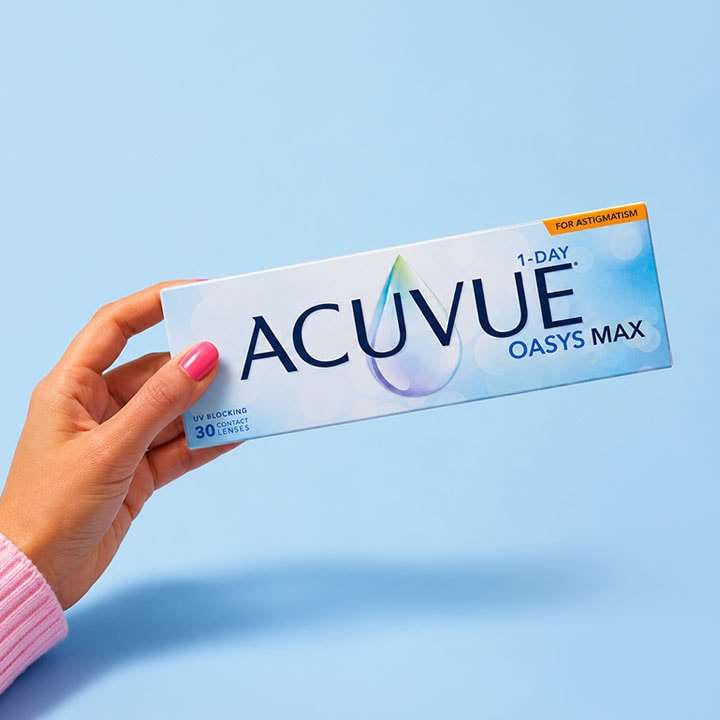
Box of ACUVUE® OASYS MAX 1-Day 30
Why halos and glare happen at night

Halos and glare are usually a sign that your prescription needs updating, or that you have astigmatism that isn't fully corrected. Astigmatism means your cornea isn't perfectly round, so light entering your eye scatters instead of focusing to a single point. That scattering is what creates a ring of light around headlights and streetlights.

If this sounds familiar, it's worth asking your optician whether toric contact lenses for astigmatism could help. They're designed specifically to correct this kind of light scattering, rather than just sharpening your overall vision.

Dry eyes and night driving

Long drives, air conditioning, heating and staring at a dashboard or phone screen can all leave your eyes dry and tired. Driving with dry contacts is uncomfortable, and it can blur your vision at exactly the wrong moment.

If your eyes often feel gritty or tired by the end of a drive, our guide to common contact lens complaints and how to treat them explains what's normal and when to see your optician.

Glare from dashboard screens and phone mounts can add to that strain too, so try to keep screens dimmed and take regular breaks on longer night drives.

Choosing the right contact lenses for night driving

Fresh contacts scatter less light than lenses with a build-up of protein or dust, which is why daily contact lenses are a popular choice for anyone who drives regularly at night. A new pair every day means no deposits, no cleaning routine to forget and consistently clear vision.

If you have astigmatism, make sure your contacts are designed to correct it. A standard lens won't fix the scattering that causes halos, however clean it is, so double check this with your optician or when you reorder.

Tips for safer night driving with contact lenses
  • Book regular eye tests, at least once every two years, so your prescription stays accurate.
  • Keep a spare pair of contacts (or your glasses, as backup) and some lubricating eye drops in the car in case of dryness or irritation.
  • Never wear contacts past their recommended replacement schedule.
  • Wash and dry your hands before handling contacts, especially before a drive.
  • Pull over and rest if your vision blurs or your eyes feel too dry to continue safely.


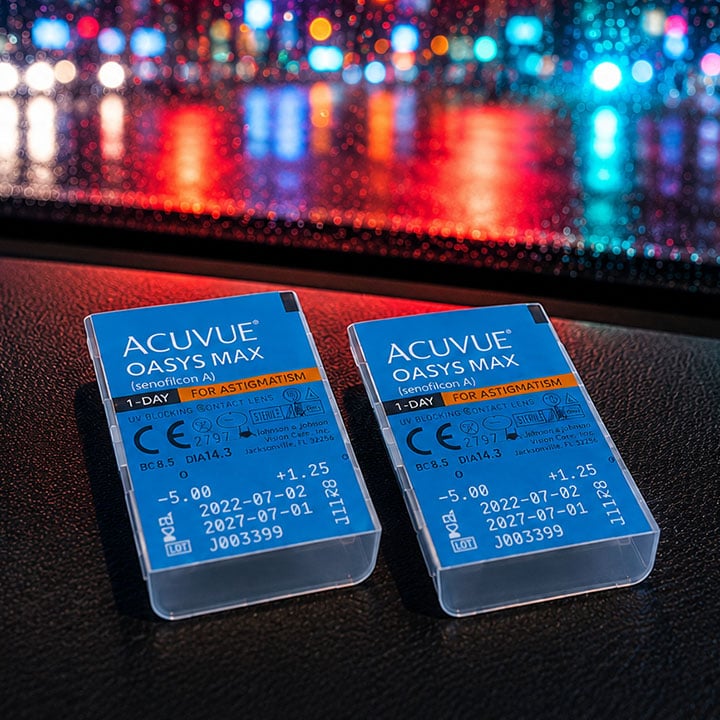
Blister packs of ACUVUE® OASYS MAX 1-Day 30
FAQs

For most people, yes. Contacts remove frames and fogging from the equation and give you a full field of view, which helps you spot movement at the edges of your vision. Glasses can still work well, but an accurate, up to date prescription matters most either way.

Halos are usually caused by an uncorrected prescription or astigmatism. Speak to your optician about toric contact lenses if this happens regularly.

Yes. Dry, tired eyes are more sensitive to glare and can blur your vision. Keep lubricating drops in the car and take breaks on long night drives.

Daily contact lenses are a good option, as they're always fresh and free from deposits that can scatter light. If you have astigmatism, choose a toric lens designed to correct it.

No. You must meet the legal eyesight standard for driving at all times, including at night. If your vision isn't clear, don't drive until it's sorted.

Most opticians recommend a test every two years, but if you drive frequently in low light, ask whether more frequent checks make sense for you.

Ready to see night drives more clearly? Shop daily contact lenses

Related links

WE ACCEPT